It's Rarely One Big Moment
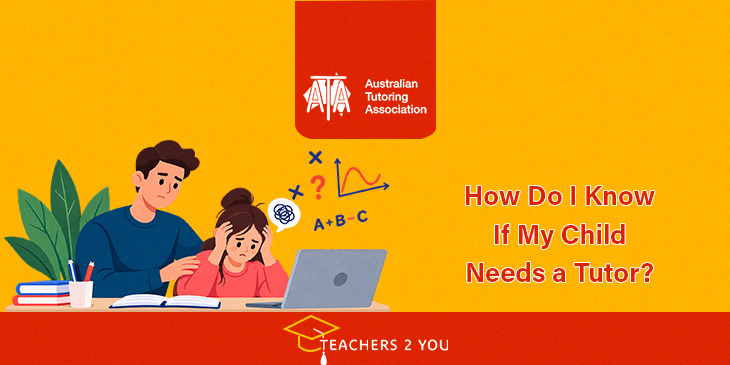
Commonly, parents don't notice a dramatic drop in grades first. They notice something smaller: a sigh before homework starts, a subject that used to come easily suddenly feeling like a wall. Signs your child needs a tutor tend to show up in behavior before they show up on a report card. Here's what that can look like, broken into three areas parents commonly flag.
Academic Signs
- Homework that used to take twenty minutes now takes ninety, with more frustration than focus
- Marks in one subject sliding while others stay steady (a strong clue it's subject-specific, not a general dip)
- Avoiding a subject altogether, "forgetting" to bring the textbook home, rushing through worksheets to be done with them
- Teacher comments mentioning your child "isn't participating as much" or "seems unsure" in class
Emotional and Behavioral Signs
Academic struggle rarely stays academic. It often shows up as mood first. Many parents notice their child becoming quieter around a specific subject or reacting with unusual frustration to homework that wouldn't have bothered them a term earlier.
Some children mask it with humor rather than admitting they're lost. Others go quiet and disengaged, which is easy to mistake for laziness when it's closer to avoidance.
Homework Battles
If homework time has become a nightly negotiation, that's data, not just a bad evening. A single hard night doesn't mean much. A pattern across several weeks, where every session in one subject turns into a standoff, usually points to a genuine gap rather than a motivation problem.
Is It Just a Phase, or Something Worth Addressing Now?
This is where a lot of parents hesitate, and reasonably so. Kids have off weeks. New teachers, changed friend groups, and a growth spurt-all of it can dent focus temporarily.
The distinction that tends to matter: a phase usually fades within two to three weeks on its own. A genuine gap doesn't. If the struggle is still there a month later, and especially if it's isolated to one subject rather than everything at once, that's less likely to resolve by itself.
Waiting isn't neutral, either: In subjects that build sequentially, like math, a missed concept in Term 2 tends to resurface in Term 3, harder to untangle the longer it sits. Early support, even a handful of sessions, is generally easier and less stressful than catching up later.
Year-Level Context Matters
What counts as a "sign" shifts depending on where your child is in their schooling. A Year 3 student struggling with times tables is a different situation to a Year 10 student freezing on algebra before an exam. Younger students often show struggle through avoidance and mood. Older students, juggling more subjects and higher stakes, tend to show it through slipping organisation, cramming, or simply going quiet about how school is actually going.
If you're unsure what's typical for your child's specific year level, checking expectations for that year (rather than comparing to a sibling or classmate) usually gives a clearer read than instinct alone.
What to Do Before You Decide
A few practical steps before jumping to any conclusion:
- Talk to the teacher: A short email asking how your child is tracking in class, not just on tests, often surfaces things a report card doesn't.
- Watch for the pattern, not the moment: One bad week means little. Three or four weeks of the same struggle means more.
- Ask your child directly, without pressure: "What's the hardest part of math right now?" tends to get a more honest answer than "Do you need help?"
- Notice whether it's isolated or general: One subject slipping points to a content gap. Everything slipping might point elsewhere: tiredness, well-being, or a bigger transition happening at school.
| Know how you can choose the right tutor for your child
Why Teachers2You Approaches This Differently
Most tutoring platforms match your child with whoever's next in the queue. At Teachers2You, every tutor is a currently practising, registered Australian teacher, someone who is in a real classroom teaching this exact year level and subject right now, not a university student or a retired teacher years removed from the curriculum. That distinction matters more than it sounds: a practising teacher recognises the difference between a child who's behind on content and a child who understands the content but has lost confidence, and those two problems need different approaches entirely.
Sessions run one-on-one over live video with a shared digital workspace, so the tutor can see exactly what your child is working through in real time, not guessing from a description after the fact. And your child keeps the same tutor across sessions. There's no re-explaining where they're stuck to a new face each week, which on its own removes a surprising amount of the friction that makes kids dread tutoring in the first place.
Trust What You're Already Noticing
You know your child's normal better than any checklist does. If something's felt off for a few weeks, especially in one subject, that instinct is usually worth listening to. Getting support early, while the gap is still small, tends to be far less stressful than waiting until it's become the whole story.
If you're noticing a few of these signs and want to talk through what's actually going on for your child, get in touch with Teachers2You for a chat about their specific year level and subject.
FAQs
- How do I know if my child needs a tutor or if it's just a phase?
A phase usually fades within two to three weeks on its own. If the struggle continues longer, especially when it's isolated to one subject, it's likely a genuine learning gap worth addressing early.
- What are the first signs a child might be falling behind at school?
Common early signs include homework taking far longer than usual, avoiding a specific subject altogether, or a drop in classroom confidence, often appearing well before grades actually change.
- Does tutoring only help students who are struggling academically?
No. Many students use tutoring to extend ahead of their year level, build confidence before exams, or deepen understanding in a subject they already enjoy and want to master further, not just catch up.
- What makes Teachers2You different from other online tutoring services?
Every tutor at Teachers2You is a currently practicing, registered Australian teacher working in a real classroom, not a university student, so sessions reflect genuine curriculum knowledge and experience.
- What actually happens during a first tutoring session with Teachers2You?
The tutor reviews your child's current work and confidence level, identifies specific gaps, and then builds a personalized learning plan around that exact subject, year level, and school curriculum.
- How long before I notice a real difference in my child's confidence?
Many families notice a shift in confidence and willingness to engage within two to four weeks of regular sessions, though bigger academic gains vary by subject and where your child started.
- Can Teachers2You tutors help with NAPLAN preparation specifically?
Yes. Sessions can focus directly on the numeracy and literacy skills NAPLAN assesses, tailored to your child's year level, timed around test dates, and their specific areas of difficulty.
- Is online tutoring actually effective for younger children, like Year 2 or 3?
Yes. Live one-on-one video sessions work well for younger children, particularly with a consistent tutor across every session who builds familiarity, routine, and trust week to week.
- Do we have to commit to a long-term contract to start tutoring?
No. Teachers2You runs on a subscription model with no lock-in contract, so sessions can be increased, reduced, or paused entirely as your child's needs and schedule change over time.
- Can my child get tutoring support across more than one subject at once?
Yes. Sessions can cover multiple subjects at once, each with its own personalised learning plan, so support can flex around whichever areas need the most attention that particular term.